Density and Hardness
Density and hardness are two important properties used to characterise foam materials, and they provide different… continue reading
Density and hardness are two important properties used to characterise foam materials, and they provide different information about the material’s behaviour and performance. Let’s explore the differences between density and hardness in foam:
Density:
Density refers to the mass of foam material per unit volume. It is measured as kilograms per cubic meter (kg/m³)
High-density foams have more mass packed into a given volume, meaning they are denser and have smaller air pockets or cells.
Low-density foams have less mass for the same volume, indicating larger air pockets or cells.
Density affects various properties of foam, including its weight, thermal insulation, and buoyancy.
Hardness:
Hardness refers to the resistance of a foam material when a force is applied. It measures how firm or soft the foam feels when you press on it.
Hardness is typically measured using tests like the Shore Durometer hardness test, which provides a numerical value on a scale. For example, a higher Shore Durometer value indicates a harder foam, while a lower value indicates a softer foam.
Foam hardness is related to the foam’s compression and support characteristics. Softer foams tend to compress more easily under pressure, while harder foams resist compression and provide better support.
These properties are important considerations when selecting foam for specific applications. For example, in a mattress, you might want a balance of density and hardness to provide both support and comfort. Different foams with varying density and hardness values can be used for various purposes, from cushioning and insulation to structural support and comfort.
Density and hardness are two important properties used to characterise foam materials, and they provide different… continue reading

The benefits of buying custom made cushions are endless. From a completely personal, tailored experience, to… continue reading
When designing your Custom Cushions project, the type of foam you choose is an important step.… continue reading
Our team of foam experts are experienced in cutting foam to any of your requirements. Your… continue reading
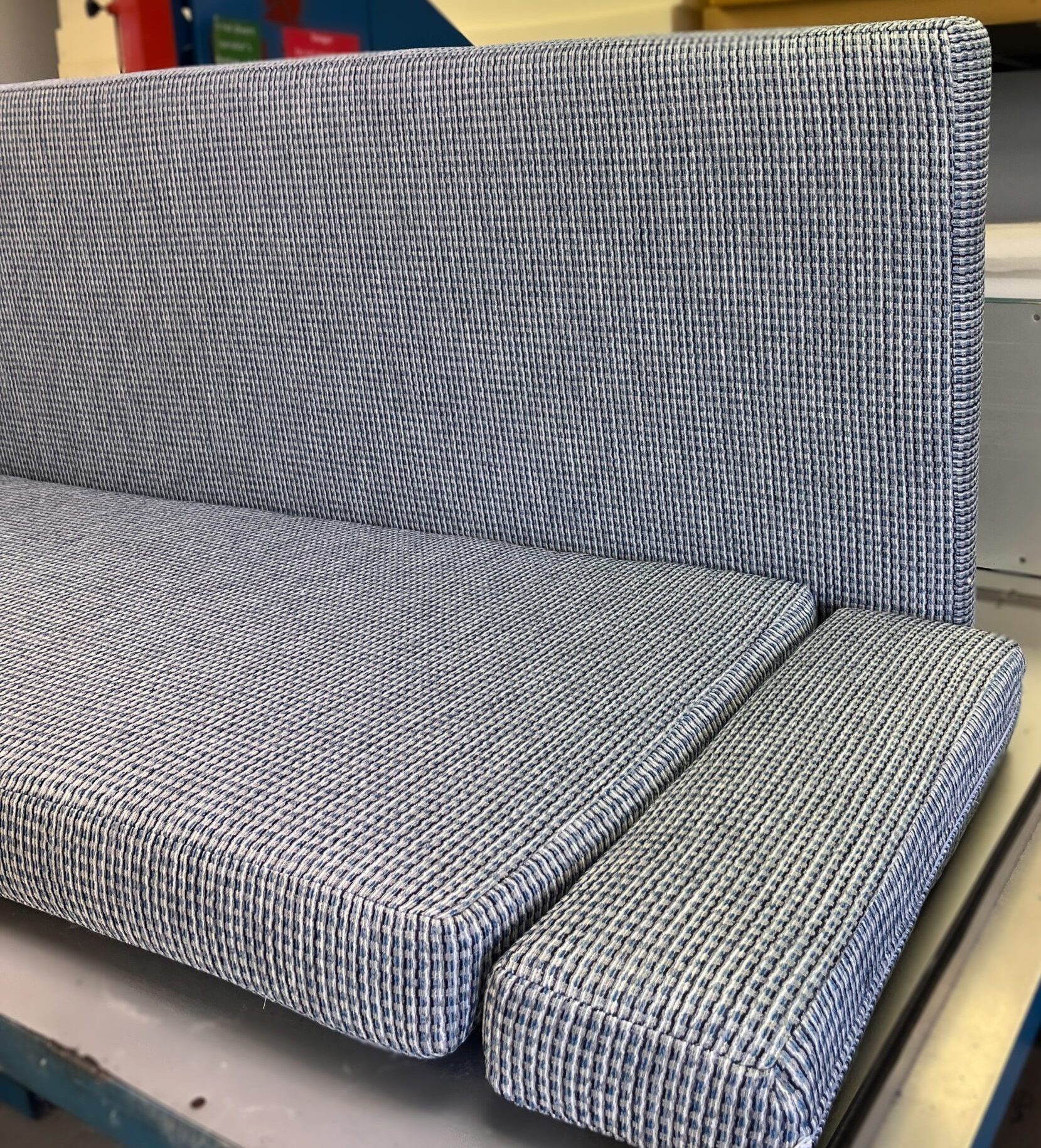
When ordering custom foam squabs for seating or cushions, the upholstery seam finish is just as… continue reading

Get Your Outdoor Areas Summer-Ready with Custom CushionsAs the days grow longer and the temperature rises,… continue reading

Furniture should be lifetime pieces. High quality, timeless, and most importantly, comfortable. So, why does it… continue reading
Good for firm seat cushions, commercial seatings, and outdoor furniture
High resilience
35-160U, 10 year warranty
Good for luxury seat cushions, day beds, mattresses
High resilience
35-130U, 10 year warranty

Ideal for outdoor cushions which are left outside not undercover
Good for firm seat cushions
Medium resilience
28-170U, 10 year warranty